Fat Cells Melt Energy To Make Heat Making Them The Next Frontier Of Weight Loss Therapies
Where Does Fat Go When You Reduce Weight? However, scientists now acknowledge that it's also an energetic organ in your endocrine system. Adipose tissue consists of afferent neuron and capillary and connects with hormonal agent signals with various other organs throughout your body. In summary, fat is a vital macronutrient that needs to be crucial in every endurance athlete's diet. Fat is useful for lower-intensity training, and guaranteeing total calorie intake is in line with the needs of the training program. Above all, your training schedule and auto racing objectives must drive your nourishment, not the other way around. The closer the result is to 0.7, the much better you go to using fat during remainder and lower-intensity task. In addition, you can perform a graded workout examination (bike and/or treadmill) to identify how much fat you shed per min and the highest strength at which you can utilize it for a main gas source. The crossover point is where you use half carbohydrates and 50 percent fat for fuel. Once this is gotten to, the greater the intensity, the less fat and more carbs your body will prefer to use.
Bls For Healthcare Providers
Under typical conditions, though, human beings store simply sufficient glycogen to provide a day's well worth of power. Plant cells don't generate glycogen yet instead alter sugar polymers known as starches, which they save in granules. The electron transportation chain in the mitochondrial membrane is not the just one that generates energy in living cells. In plant and various other photosynthetic cells, chloroplasts also have an electron transportation chain that harvests solar energy. Despite the fact that they do not contain mithcondria or chloroplatss, prokaryotes have other kinds of energy-yielding electron transportation chains within their plasma membrane layers that also create power.What are the largest fat loss errors?
- Keep in mind: your drop in weight doesn't always mirror fat loss.Mistake 2: overestimating calories burned.Mistake 3: not obtaining adequate protein.Mistake 4: relying on cardio.Mistake 5:
- missing sleep and recovery.Mistake 8: not tracking your intake.Ready to do something about it? Using a pedometer to track your steps. & #x 201c; After regarding 30 to 60 mins
- of cardiovascular exercise, your body starts burning mostly fat, & #x 201d; Dr. Rifai discusses.( If you're working out reasonably, this takes
+(2).png?format=2500w)
regarding an hour. )If all that workout really feels out of grab you, begin slow-moving and construct your means up.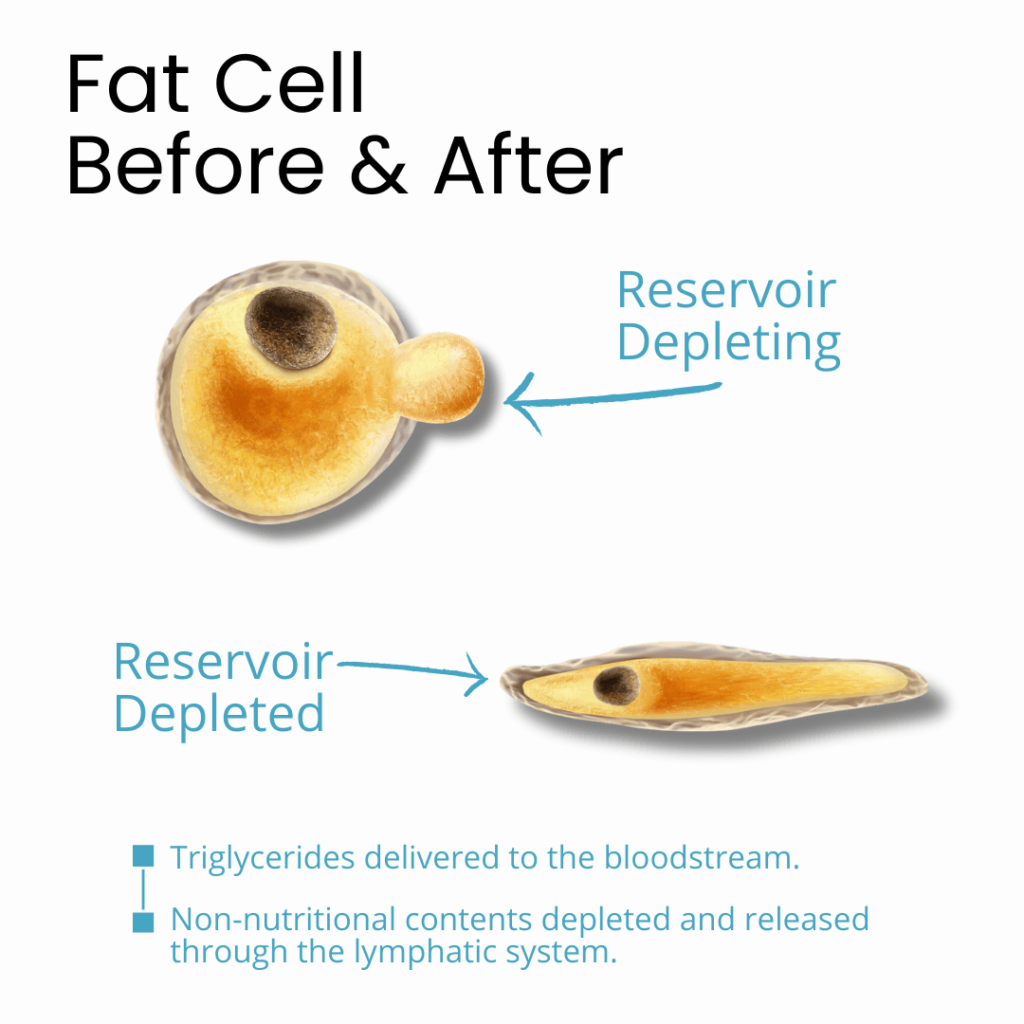
Beta-oxidation Of Fats To Generate Energy
With a process called "beta-oxidation," our cells can create power by metabolizing among the building blocks of fats-- fatty acids. Throughout exercise and durations of fasting, our bodies damage down fat shops to launch fatty acids, which can then be used by muscular tissues for fuel. Our weight would certainly increase if we kept the very same quantity of energy as glycogen (plus the water that glycogen holds) that we save as body fat. Most of us have enough power shops of fat (fat or body fat), plus the body conveniently transforms and shops excess calories from any type of source (fat, carb, or protein) as body fat. In order for fat to fuel exercise, nevertheless, enough oxygen should be at the same time taken in. The second part of this phase briefly explains how speed or intensity, in addition to the length of time that you exercise, affects the body's ability to use fat as fuel. Long-chain fatty acids should go through protein-mediated transport throughout the cell membrane layer right into the cytosol via fatty acid translocase (FAT) or fatty acid-binding protein (FABP). The fatty acyl-CoA should currently be carried right into the mitochondria with the outer mitochondrial membrane and is done so by carnitine palmitoyltransferase-I (CPT-I) where it ends up being fatty acyl-carnitine. One more common myth is that you can reduce your body fat percent by merely boosting burning fat throughout training and cutting your carb fueling. HSL executes the second step and hydrolyzes DAGs, creating monoacylglycerols and FFAs. The future of metabolic therapeutics for weight reduction may entail carefully raising energy change throughout multiple cells. The difficulty is doing so without causing compensatory cravings or unintended negative effects. Any kind of treatment that drastically increases metabolic demand risks being analyzed by the mind as a danger to survival. You can also implement healthy lifestyle adjustments, such as regular exercise, to assist in weight loss. [3] Recognizing the difference between weight loss vs. weight-loss is crucial to accomplish a healthy and balanced weight. When fat cells can no more safely store excess fat, the surplus does not disappear.- We also supply Weight Loss medicines like Wegovy, Mounjaro and Ozempic to patients who fit the standards.
- The third significant process in the eukaryotic power path includes an electron transportation chain, militarized by several protein complicateds found in the mitochondrional inner membrane layer.
- Oxidation defines a sort of chemical reaction in which electrons are transferred from one molecule to one more, changing the make-up and energy content of both the benefactor and acceptor molecules.